The Security Role of ID Card Printers in Saudi Arabia’s Access Control Systems
Can a simple ID card become a critical security checkpoint?
In Saudi Arabia’s connected access systems, secure card issuance can shape who enters, where they go and how credentials are managed. Explore how ID card printers strengthen smarter, more controlled access environments.
A guard or reader glances at a badge for two seconds. That glance decides who walks through a door and who gets turned away. Behind that glance sits one overlooked piece of hardware: ID card printers. They turn a blank sheet of plastic into a credential a scanner, a guard or a system can trust instantly.
So what actually stops a forged badge from working at a Riyadh tower or a NEOM construction site? Saudi Arabia’s access control market reached USD 161.3 million in 2024 and is projected to climb to USD 409.8 million by 2033, growing at roughly 11.2% CAGR, according to Grand View Research data on the sector.
Smart Finger has spent more than a decade fitting Saudi businesses with identity hardware built for real security pressure. This blog looks at why the printer matters just as much as the door lock it feeds into.
ID Card Printers as the First Layer of Secure Access Control
Most people think access control starts at the reader — the little box mounted beside a door. But it doesn’t. Instead, it starts earlier, at the point where a credential gets created. An ID card printer that produces low-quality output, or one that skips encoding altogether, hands a facility a weak link before the system even runs.
Picture a manufacturing site issuing badges to 400 contract workers during a project ramp-up. If the ID printer used isn’t configured to encode each card against the site’s access database, guards end up relying on visual checks alone. That gap is exactly where tailgating and badge-sharing creep in.
A properly configured setup can:
- Print a visually verifiable badge — photo, name, role and department clear enough for a guard to check at a glance.
- Encodes machine-readable data the reader trusts, whether that’s a magnetic stripe, an RFID chip or a smart card profile.
Miss either half, and access control cards become decorative rather than functional.
Moreover, Saudi Arabia’s push towards smart cities adds urgency here. Projects across Riyadh, Madinah and Al-Ahsa are scaling up integrated security systems as urban development accelerates. Also, each new site multiplies the number of credentials in circulation. Additionally, more cards in circulation means more opportunities for id card printing gaps to surface unless the hardware and process are built correctly from day one.
A facility manager auditing badge access after an incident often finds the same root cause: printers that were never set up to talk to the access system in the first place. Fixing that isn’t complicated. It just requires treating the printer as part of the security stack, not a stationery purchase.
Choose the right ID card printer for your organisation.
Call Smart Finger at +966 56 997 2277 or drop an email at [email protected] for more information.
The Technology Driving Secure and Efficient Card Issuance
Card issuance technology has moved well past simple photo printing. Modern systems combine several layers, each addressing a different way a credential could fail or be exploited.
Printing methods that determine card quality:
- Dye-sublimation printing — It is widely used for photo-quality card printing on PVC cards, laying color in fine gradients.
- Retransfer printing — This method can provide edge-to-edge coverage and advantages with certain card surfaces
Encoding options, matched to what the reader expects:
- Magnetic stripe encoding, for legacy access systems still in use at older facilities.
- Contactless smart chip encoding, common in newer enterprise deployments.
- RFID encoding, increasingly favored by government facilities and regulated industries because it supports the audit trails compliance frameworks require.
This is where ID card printers earn their security role — a single pass through the machine can handle printing and encoding together, rather than treating them as separate steps.
Security add-ons that close remaining gaps:
- Holographic overlays make counterfeiting noticeably harder without slowing down issuance.
- UV-visible printing makes prints invisible under normal light but verifiable under ultraviolet light.
- Tamper-evident laminates enable a card that’s been peeled apart or reprinted show visible damage instead of passing as original.
Choosing the best ID card printer for a given site depends on volume and risk level. A boutique office issuing a handful of badges a month has different needs than a logistics hub running three shifts. A well-specified plastic card printer or PVC card printer handles both, but only if someone matches the machine’s capability to the actual threat the site faces. That’s a sourcing decision, not just a technical one, and it’s where guidance from an experienced supplier saves real money.
Smart Finger: Connecting ID Card Printers to Saudi Security Needs
Smart Finger has operated in Saudi Arabia for more than ten years, and that timeline matters because card issuance requirements here have shifted considerably over that period. Government compliance expectations, private-sector security budgets and the sheer scale of new developments have all changed what a business needs from its ID card printer in Saudi Arabia.
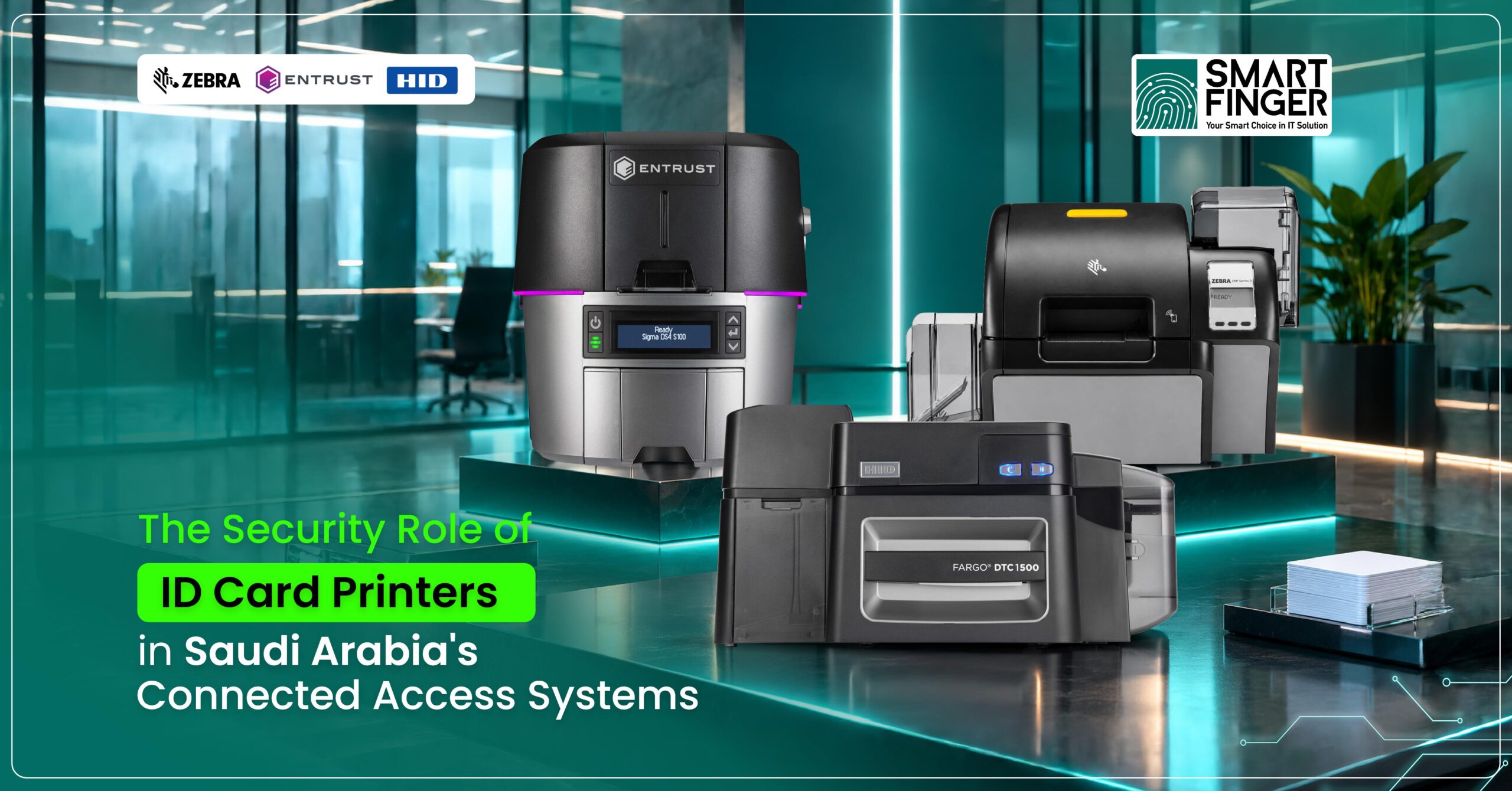
Brands available through Smart Finger, and where each one fits:
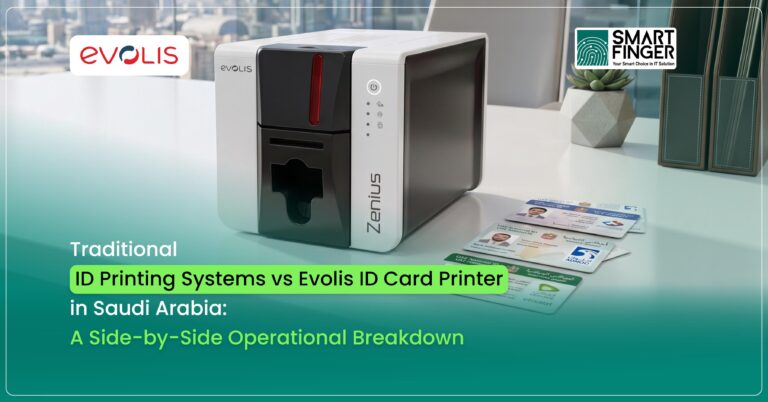
- Evolis — Compact and sleek, built for on-demand issuance in smaller offices.
- Entrust — High-volume printing with built-in encoding, suited to enterprise-level operations.
- Heidi — Efficient and user-friendly, aimed at small to medium-sized businesses.
- Zebra — Durable and high-speed, for sites that can’t afford downtime.
HID Fargo — Versatile and easy-to-use design.
That range lets a Riyadh clinic and a Jeddah logistics operator each find hardware sized to their actual card volume, not an oversized or undersized default.
What sets the approach apart is integration. Smart Finger doesn’t sell printers in isolation. The same team supplies:
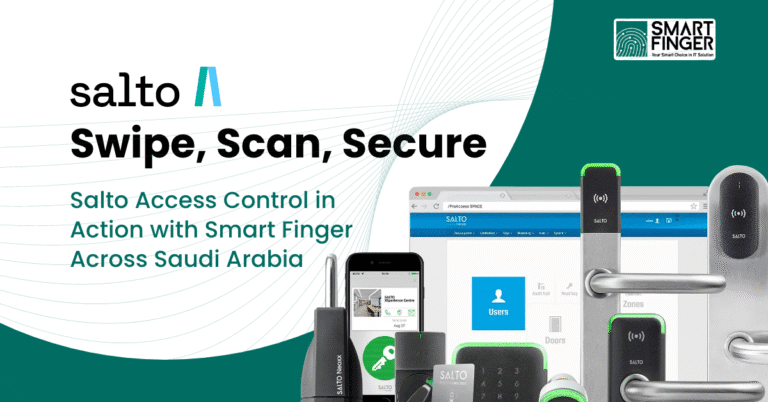
- Biometric and access control devices
- RFID readers and RFID cards
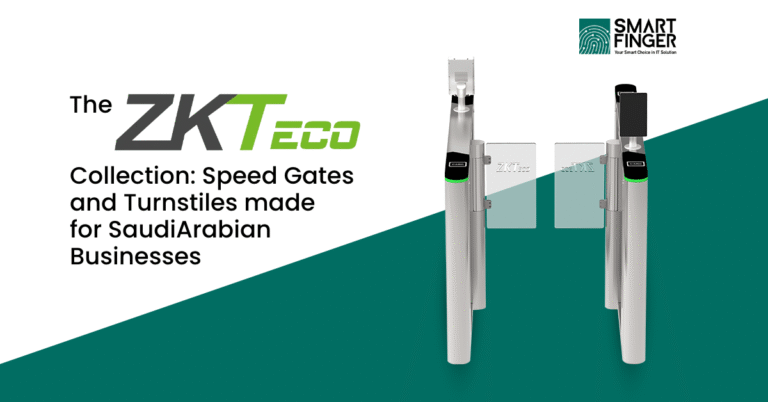
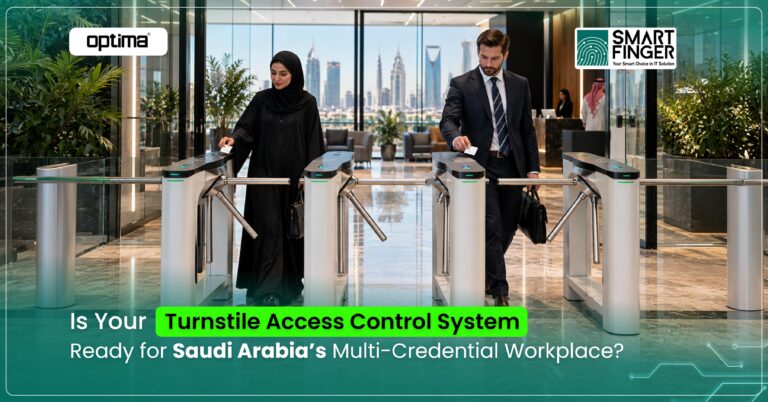
- Turnstiles and speed gates
This means employee ID card printing connects directly to the access hardware reading those cards later. A newly issued badge and the turnstile it opens come from a coordinated system, not two vendors that never spoke to each other.
For a business scaling from one office to several sites, that consistency reduces a real headache: mismatched card formats that force IT teams to run parallel systems. Working with a single supplier for ID card printing solutions and access hardware keeps that fragmentation from happening in the first place. Also, it’s a detail that only becomes obvious once a company has lived through the alternative.
Conclusion
Security systems get judged by their weakest link, and that link is often the card itself, not the door. A facility can install the sharpest readers and biometric scanners available, but if the credential feeding them was produced on outdated or misconfigured ID card printing solutions, the whole chain weakens.
Saudi Arabia’s construction pipeline and smart-city ambitions aren’t slowing down. This means more sites, more badges and more pressure on issuance systems to keep pace without cutting corners.
Getting this right starts with treating ID card printers as security equipment rather than office supplies. In addition, choosing a supplier who understands how issuance connects to everything downstream. Smart Finger has built that expertise over a decade of Saudi deployments. If your current setup hasn’t been reviewed in a while, that’s worth a conversation before an audit forces the issue.
FAQ
An ID printer machine encodes data — magnetic stripe, RFID or smart chip — alongside printing the visible design. A photo printer only handles the image, so it can't produce a credential a security reader recognises.
Match the machine to your monthly card volume and encoding needs:
- Low volume → single-sided dye-sublimation model.
- Enterprise volume → a card printing machine with retransfer printing and dual-sided encoding.
untains, far from the countries Vokalia and Consonantia, there live the blind texts. Separated they live in Bookmarksgrove right at the coast
Yes. Most mid-range and enterprise printers support multiple card templates and encoding profiles. So a unit can produce permanent staff badges and short-validity visitor cards from the same device.
Not always. A small office with a receptionist checking badges visually may not need it. Once a site adds electronic door readers, though, an ID card printing machine with RFID encoding becomes essential for the system to function.
Most printers last five to seven years with regular maintenance, but usage volume matters more than age. A high-traffic site running thousands of cards monthly may need servicing or replacement sooner than a low-volume office.